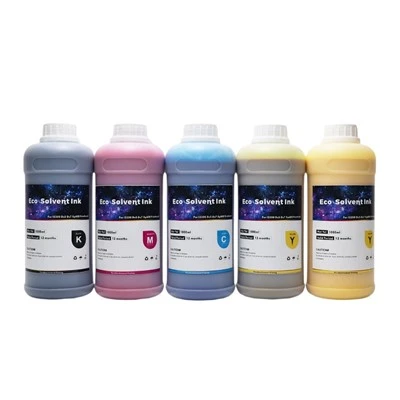
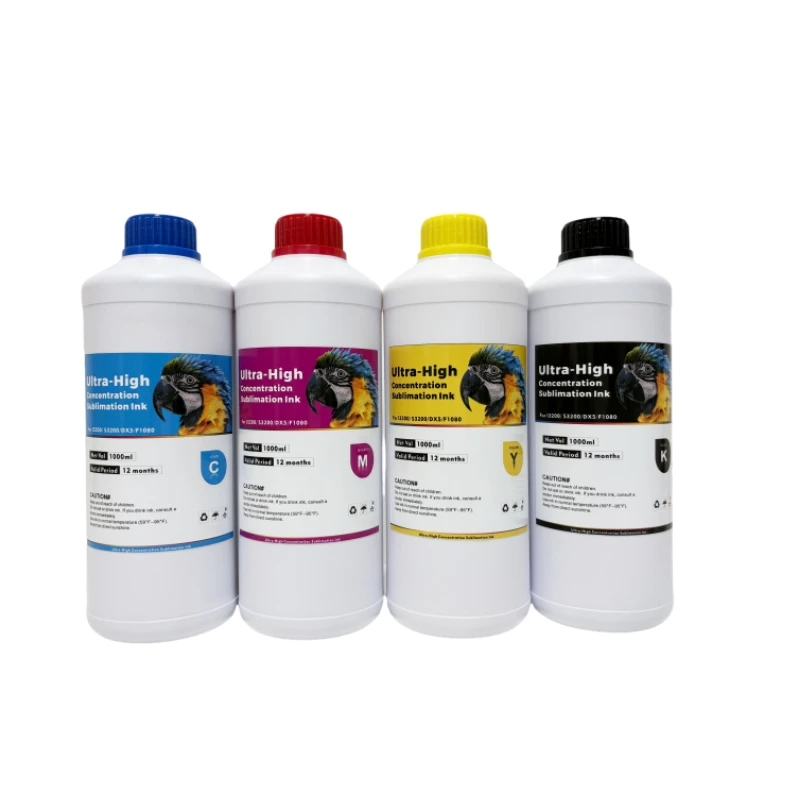
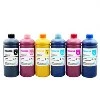

Mild solvent inks are a type of inkjet printing material that uses organic solvents as the primary dissolving medium and achieves the dispersion, dissolution, and adhesion of pigments or dyes through a relatively mild solvent system. Compared to traditional strong solvent inks, the solvents used in mild solvent inks have relatively lower corrosiveness to the surface of the printing medium, thus reducing the impact on the substrate surface coating and material structure during use. In terms of composition, mild solvent inks typically consist of pigments, solvents, resins or film-forming substances, dispersants, and a small amount of additives. The solvent mainly plays a role in dissolving and dispersing the components, adjusting the ink viscosity and surface tension, and promoting the spread of ink droplets on the substrate surface. Due to the volatility of its solvent system, after the ink is sprayed onto the material surface, some of the solvent gradually evaporates, while the pigments and resins form a relatively stable ink layer on the substrate surface, thereby achieving the presentation and fixation of graphic information.
Mild solvent inks are mainly positioned between water-based inks and traditional strong solvent inks. On the one hand, unlike water-based inks, it doesn't heavily rely on the ink absorption capacity of the substrate, exhibiting good adhesion to treated advertising materials, outdoor printing materials, vehicle wraps, lightbox fabrics, and photographic materials. On the other hand, its solvent's corrosive power is lower than that of strong solvent inks, resulting in relatively less corrosion, swelling, and surface damage to some substrates. Weak solvent inks also typically possess good water resistance, weather resistance, and image stability; printed patterns are less prone to significant dissolution or peeling from small amounts of water. In practical applications, the ink's drying speed, adhesion, color performance, scratch resistance, and long-term outdoor stability are influenced by various factors, including solvent composition, resin type, pigment particle size, additive ratio, and printing parameters. Therefore, "weak solvent" is not simply defined by a single chemical substance, but rather by the solvent properties of the entire ink system, its material compatibility, and its overall performance during use.
Mild solvent inks are primarily used in inkjet printing applications where image durability and material compatibility are critical, particularly in advertising production, outdoor printing, commercial signage, vehicle wrapping, and some decorative graphic outputs. Compared to traditional strong solvent inks, mild solvent inks offer advantages in reducing solvent erosion and improving the operating environment, while maintaining good color reproduction and image adhesion. Therefore, they have established a relatively stable application range in the inkjet printing industry. However, the "mild" in mild solvent inks primarily refers to their relatively mild solvent action; it does not mean they are completely free of volatile organic compounds, nor can they be simply interpreted as absolutely environmentally friendly or odorless. In actual production and use, a comprehensive evaluation based on the ink's specific formulation, solvent type, volatility characteristics, and equipment ventilation conditions is still necessary. In general, mild solvent inks can be understood as inkjet printing inks that seek a balance between dissolving power, material compatibility, image durability, and the operating environment. Their core characteristic is the use of a relatively mild organic solvent system, minimizing the adverse effects of traditional strong solvent systems on the substrate and the operating environment while ensuring print quality and adhesion.