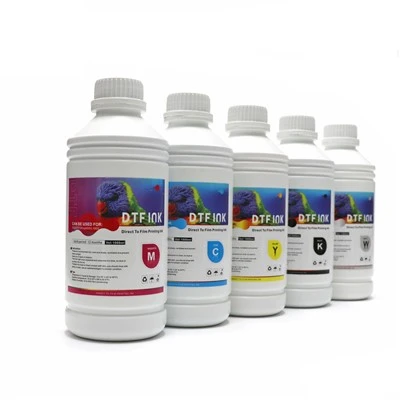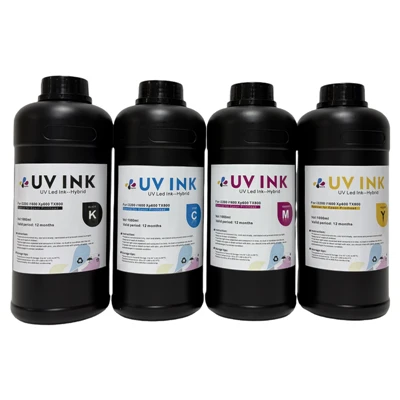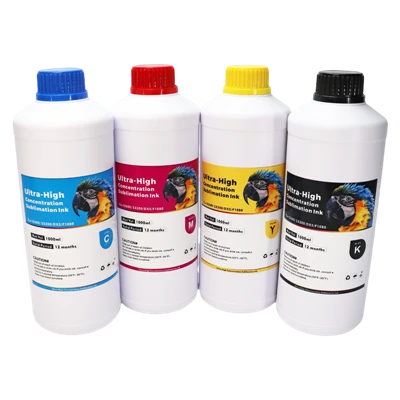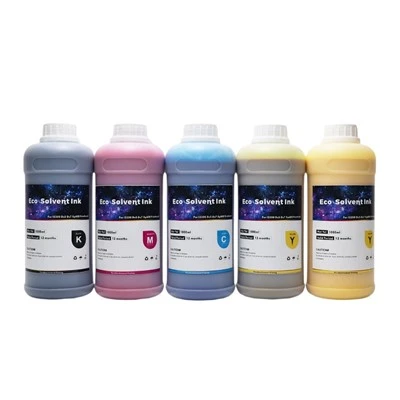



Mild solvent inks were initially used primarily in outdoor advertising, vehicle wraps, light boxes, and various inkjet printing materials. Compared to traditional solvent-based inks, mild solvent inks offer improvements in odor, environmental friendliness, and safety while maintaining good adhesion and weather resistance, thus gradually becoming an important product in the inkjet printing field. With the continuous maturation of inkjet printing equipment and printhead technology, the printing accuracy, color performance, and stability of mild solvent inks have also improved, expanding their applications from early outdoor advertising to interior decoration, commercial displays, and personalized production.
Increasing environmental requirements have significantly impacted the development of mild solvent inks. Traditional solvent-based inks tend to generate strong volatile organic compounds (VOCs) during use, while mild solvent inks reduce the amount of organic solvents used, minimizing environmental impact while maintaining printing performance. Simultaneously, the increasing market demand for high-precision, high-efficiency, and low-odor printing products has prompted manufacturers to further adjust formulations, improving pigment dispersion, solvent systems, and resin materials to achieve a better balance between drying speed, adhesion, scratch resistance, and weather resistance.
The development of solvent-based inks will continue to move towards greater environmental friendliness, higher performance, and more diverse applications. On one hand, the industry will continue to reduce the use of highly volatile solvents and improve the safety and environmental adaptability of inks. On the other hand, as inkjet equipment evolves towards higher speeds and higher resolutions, inks need to possess better jetting stability and color reproduction capabilities. Furthermore, the growth in demand for new advertising materials, decorative materials, and personalized printing will also create new application opportunities for solvent-based inks. Overall, the development of solvent-based inks is not simply about replacing traditional solvent-based inks, but rather about continuously seeking a more reasonable balance between environmental requirements and printing performance.