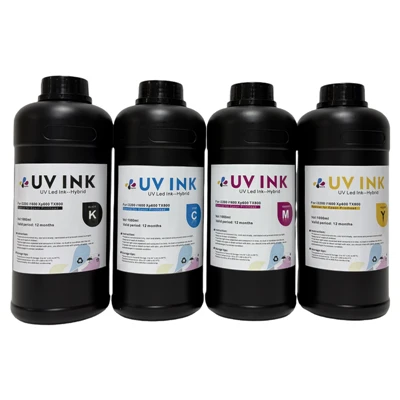
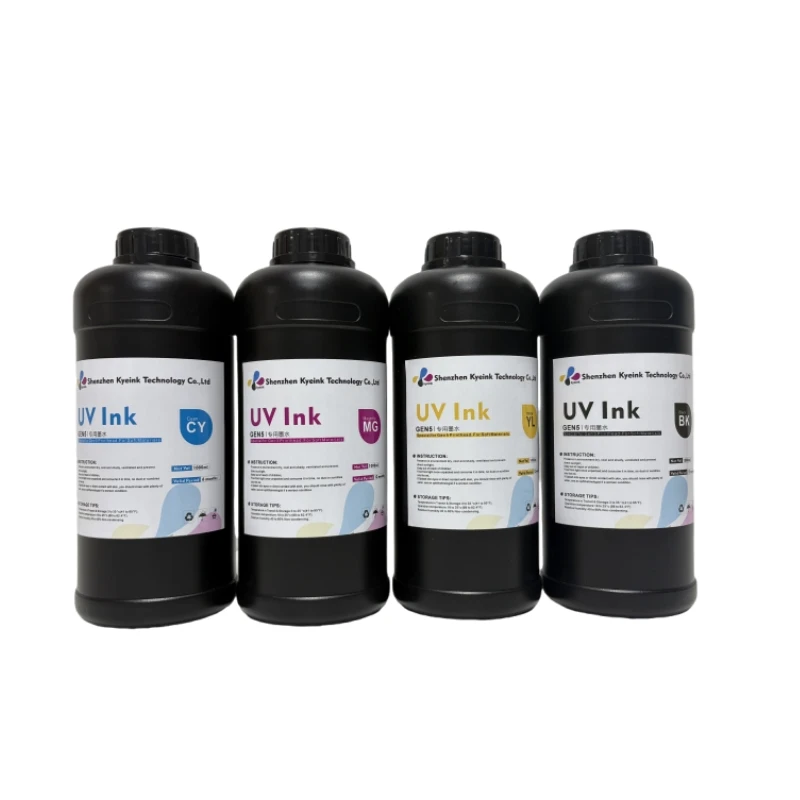
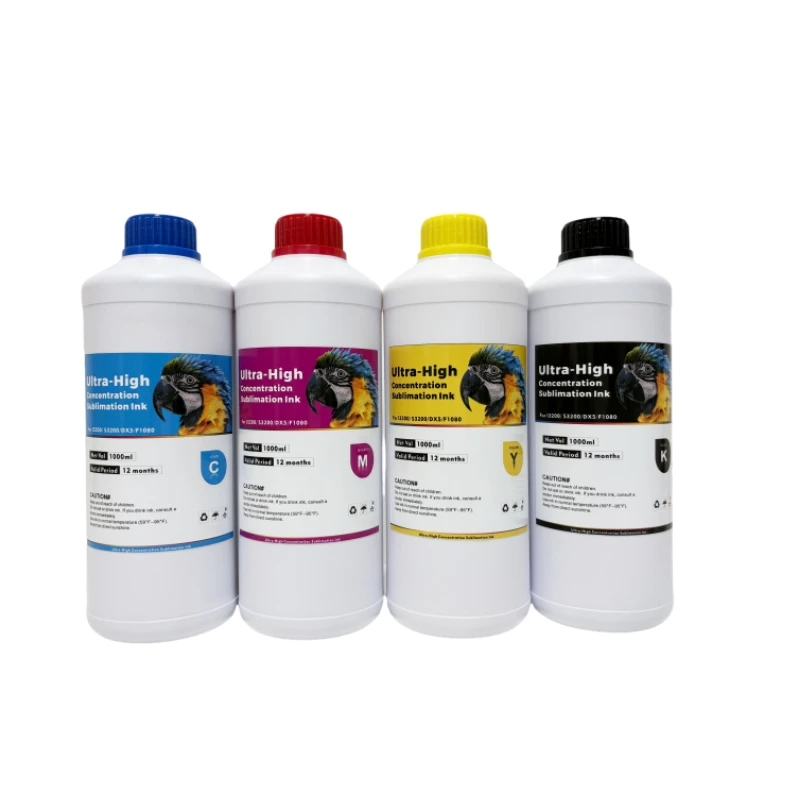
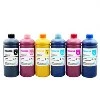

UV ink is a type of ink that cures rapidly under ultraviolet (UV) light; it is primarily composed of photosensitive resins, reactive diluents, photoinitiators, and pigments. Unlike traditional inks that rely on solvent evaporation or oxidative drying, UV ink undergoes a reaction when exposed to UV light of specific wavelengths: the photoinitiators absorb UV energy and generate highly active free radicals or other reactive species. These trigger polymerization among the unsaturated groups in the resins and diluents, transforming the liquid ink into a solid film within a very short time.
UV lamps or UV-LED light sources irradiate the ink immediately after it has been jetted or printed onto the material's surface. Once excited by the light energy, the photoinitiators initiate polymerization, causing the active components in the ink to link together and form a three-dimensional cross-linked structure, ultimately curing the ink layer. The curing speed depends on factors such as UV wavelength, light intensity, exposure duration, and the specific ink formulation. Insufficient light energy can lead to issues like incomplete surface curing or reduced adhesion; conversely, the right light source and formulation ensure rapid curing while maintaining excellent color reproduction and surface properties.
A key characteristic of UV ink is that it does not rely on significant solvent evaporation during the curing process, resulting in rapid curing, high printing efficiency, and compatibility with a wide range of materials. Currently, these inks are widely used in applications such as large-format advertising printing, packaging, labeling, and industrial decoration. However, UV ink performance is influenced by the surface characteristics of the material and the curing conditions; for instance, when printing on non-absorbent materials like plastic, metal, or glass, particular attention must be paid to the adhesion between the ink and the substrate. Therefore, practical applications require the selection of appropriate UV ink formulations and curing parameters based on the printing material, equipment, and operating environment.