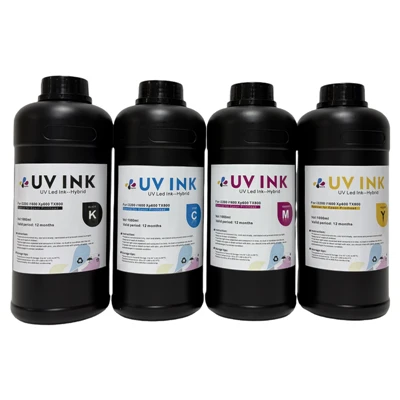
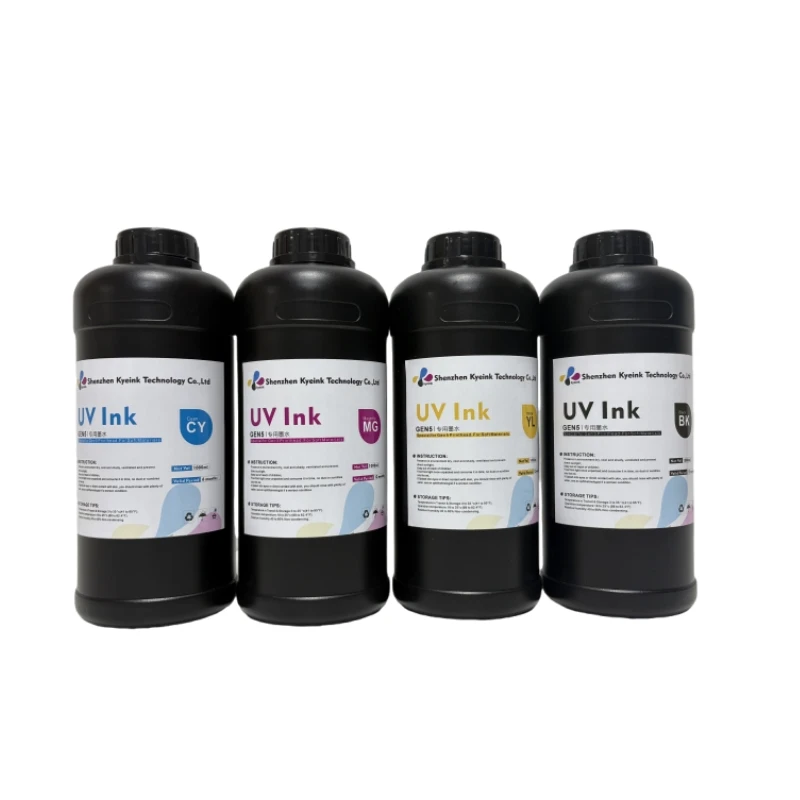

The development of UV crystal label ink stems from the continuous evolution of UV-curing ink technology. UV-curing technology emerged in the printing ink sector in the late 1960s; it utilizes ultraviolet light to trigger polymerization in the ink's photosensitive materials, rapidly transforming liquid ink into a solid film. Early UV inks were primarily used in offset and screen printing, gaining traction in the packaging and printing industries due to their rapid curing, lack of solvent emissions, and superior surface finish.
With the advancement of digital printing, UV inkjet technology matured after the 1990s, driving the adoption of UV inks in fields such as advertising production, industrial signage, and decorative materials. Unlike traditional inks, UV inks can be printed directly onto non-absorbent surfaces-including glass, metal, plastic, and acrylic-while offering instant curing, strong adhesion, and durability. These characteristics laid the technical foundation for the development of innovative decorative processes like crystal labels and personalized labeling.
Driven by advancements in crystal label techniques, digital printing equipment, and eco-friendly materials, UV crystal label inks have continuously evolved toward higher precision, stability, and versatility. Modern UV crystal label inks feature optimized resin systems, pigment dispersion technologies, and curing formulations that enhance color vibrancy, 3D effects, and long-term performance. Furthermore, attributes such as low odor, low volatility, and energy-efficient curing have facilitated their widespread application in advertising signage, packaging decoration, electronic product aesthetics, and creative merchandise.