
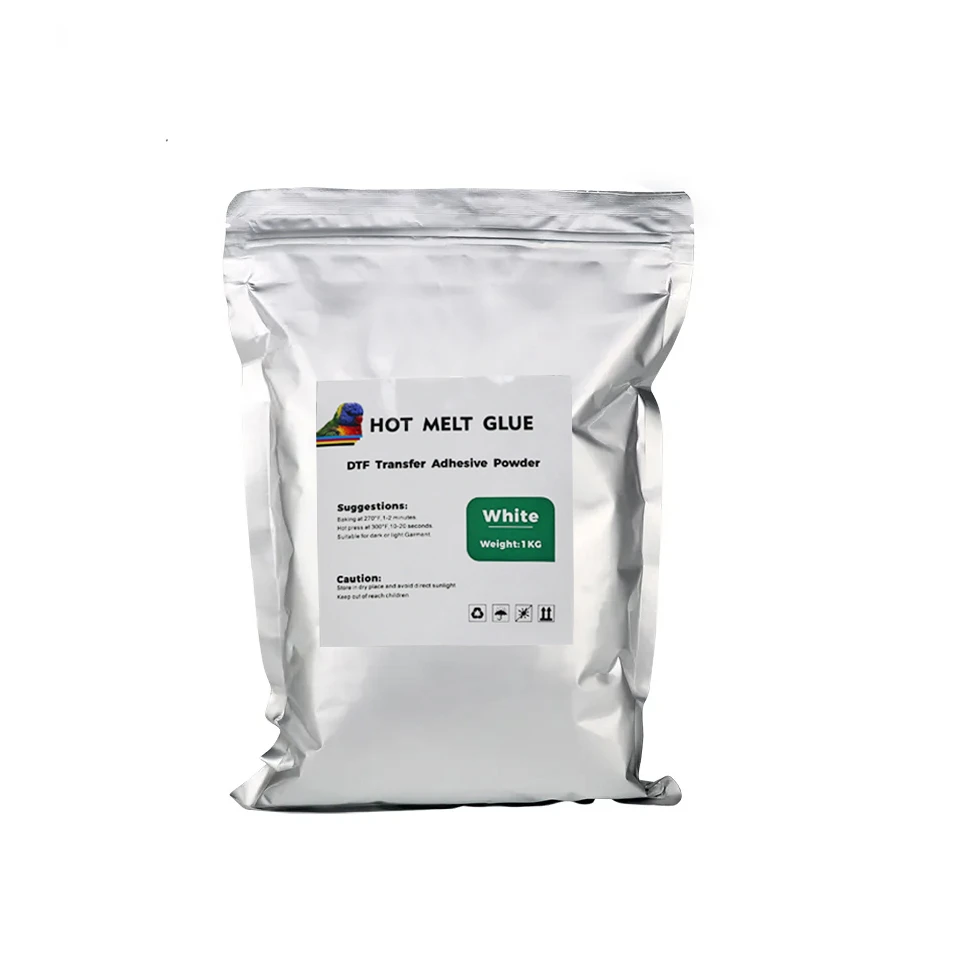


Hot melt adhesive powder is a type of powdered adhesive primarily composed of thermoplastic polymers. Common base materials include polyamide (PA), polyester (PES), ethylene-vinyl acetate copolymer (EVA), and thermoplastic polyurethane (TPU). It is typically a white, light yellow, or translucent powder, with particle size varying depending on the specific application and manufacturing process. At room temperature, hot melt adhesive powder generally remains solid and exhibits good storage stability. Upon heating, it gradually softens and melts, forming a fluid adhesive layer. Upon cooling, it re-solidifies, thus achieving bonding between materials. This reversible thermoplastic characteristic is one of the key features distinguishing hot melt adhesive powder from reactive adhesives.
Hot melt adhesive powder usually has a well-defined softening or melting temperature range. When the temperature reaches its characteristic melting range, the powder begins to soften. As the temperature continues to rise, the melt viscosity gradually decreases, and the wetting and spreading abilities increase, facilitating better contact with the bonded materials. Different types of hot melt adhesive powders exhibit significant differences in melting temperature, melt viscosity, and thermal stability. These parameters are closely related to their molecular structure, molecular weight, and additive composition. In practical applications, the heating temperature needs to be matched with the melting characteristics of the adhesive powder. Too low a temperature may lead to incomplete melting, while too high a temperature may cause thermal degradation, discoloration, or performance decline.
Hot melt adhesive powders typically possess certain water resistance, chemical resistance, and heat resistance, but their specific performance depends on the powder's chemical composition and modification methods. Physical parameters such as particle size distribution, bulk density, hygroscopicity, and flowability also directly affect their processing and application. For example, adhesive powders with more uniform particle size generally maintain a stable distribution more easily during powdering, conveying, and heating, while materials with high hygroscopicity require moisture protection during storage to prevent powder clumping or affecting the bonding performance after melting. Therefore, when evaluating the physicochemical properties of hot melt adhesive powders, it is usually necessary to comprehensively consider their appearance, particle size, melting temperature, melt viscosity, thermal stability, and hygroscopicity.