
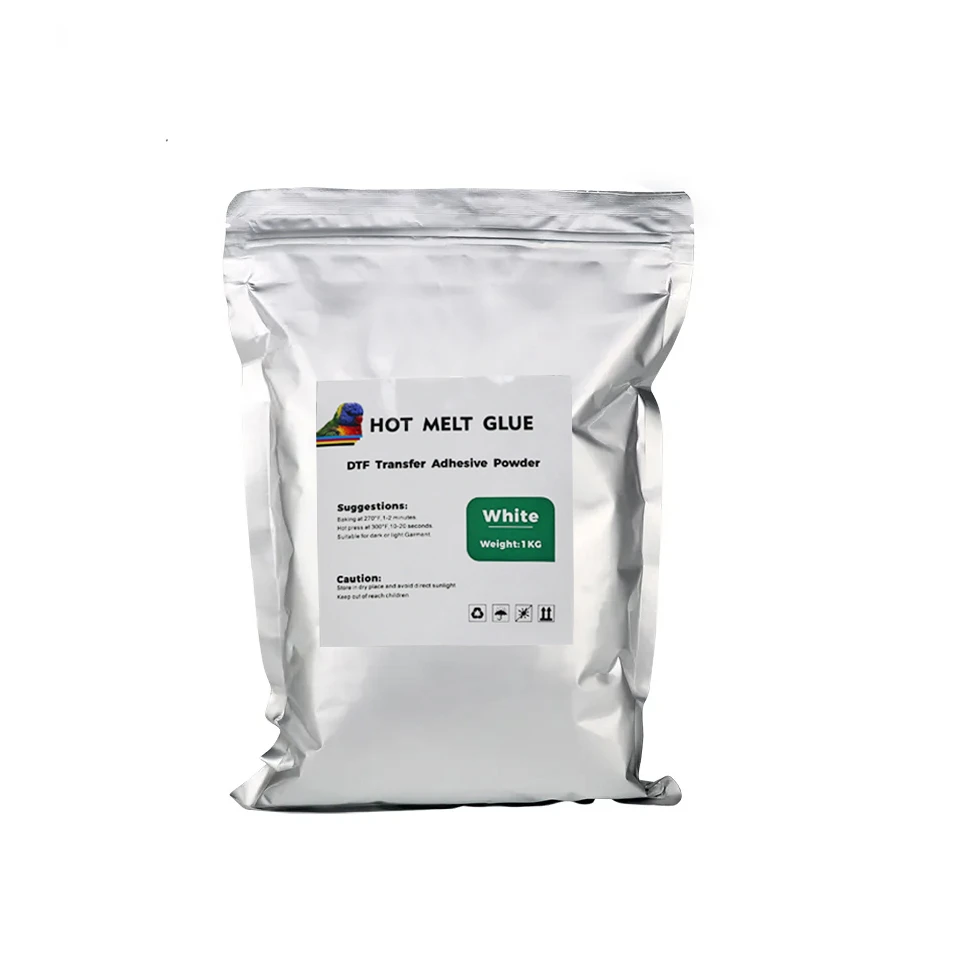


Hot melt adhesive powder, as a novel adhesive material, offers certain advantages in terms of environmental performance. Compared to traditional solvent-based adhesives, hot melt adhesive powder typically requires less addition of organic solvents during use, reducing volatile organic compound (VOC) emissions and thus minimizing the impact on the production environment and surrounding air. Furthermore, its processing primarily involves heating to melt the adhesive powder and form a bond, making the process relatively simple and reducing safety and environmental issues associated with solvent storage and use.
Hot melt adhesive powder boasts high utilization rates, generating minimal waste liquid and residue during the bonding process. In textiles, footwear materials, packaging, and composite materials, hot melt adhesive powder can be processed through methods such as powdering and coating, with dosage controlled according to product requirements, reducing material waste to some extent. Moreover, some hot melt adhesive powder products can be produced using recyclable or environmentally friendly raw materials. Its environmental performance also depends on the specific resin type, additive composition, and production process; therefore, its overall environmental level cannot be judged solely by its "hot melt" form.
It's important to note that hot melt adhesive powder is not inherently a completely environmentally friendly material. Its environmental friendliness requires comprehensive consideration of raw material sources, production energy consumption, usage processes, and post-disposal methods. For example, some products still consume energy during production and melting processes, and certain synthetic resins present challenges in recycling and degradation after disposal. Therefore, in practical applications, appropriate hot melt adhesive powder should be selected based on the specific composition of the product and its intended use. Furthermore, its overall environmental performance can be improved by optimizing the formulation, reducing processing temperature, controlling usage, and increasing material recycling rates.